Lead Gen AI Engineer
Generative-AI systems engineering at Insight Global, following prior work as a technical lead at NVIDIA.
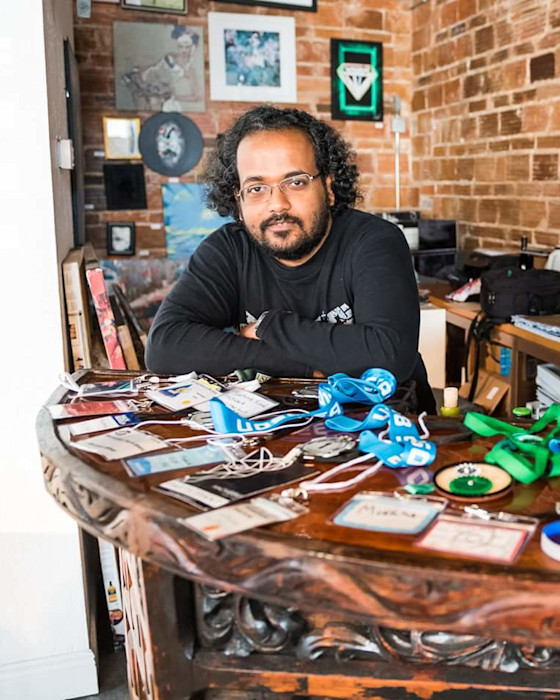
About / Muntaser Syed
I’m a Lead Gen AI Engineer, AI systems researcher, open-source builder, and technical educator working across trust, efficiency, and agent infrastructure.
Research focus
My current work covers confidence representation, provenance, temporal validity, context budgets, and edge deployment.
My doctoral work in computer engineering at Florida Institute of Technology examines artificial intelligence of things and effective machine learning on edge devices. Related projects cover semantic data, agent infrastructure, energy measurement, health sensing, compact data structures, and explainability.
Professionally, I work as a Lead Gen AI Engineer at Insight Global. I previously served as a technical lead at NVIDIA, and I contribute to DeepStation as an AI Advocate.
I also teach through conference sessions, workshops, and public repositories. These projects help me evaluate the methods in practice.
Background
My work connects applied AI engineering, doctoral research, and technical education.
Generative-AI systems engineering at Insight Global, following prior work as a technical lead at NVIDIA.
Technical education and community work spanning agent systems, MCP, explainability, fine-tuning, and applied generative AI.
Doctoral research in computer engineering, with work in AIoT, edge intelligence, trustworthy AI, robotics, and efficient machine learning.
M.S. degrees in Computer Engineering from Florida Tech and Computer Science from Abu Dhabi University.
Postgraduate study in Software Engineering at the University of Bradford and a B.S. in Information Technology from the University of Miami.
Based in Florida and active across research, open source, and technical communities.
Professional service
Conference organization, technical collaboration, and public community projects.
Co-chair, with chair Marius Silaghi, of Embodied AI Agents, Robotics, and IoT at FLAIRS-40, and a member of the conference program committee. The conference takes place May 24–27, 2027, in St. Pete Beach, Florida. Abstract registration closes January 22 and paper submission closes February 1, both at 23:59 Anywhere on Earth.
Reviewer for the World Conference on Autonomous Intelligent Systems & Robotics, hosted by Chandigarh University on January 21–22, 2027.
Main Track TPC reviewer for the 8th Computing, Communications and IoT Applications Conference, held December 14–17, 2026 as a hybrid event in Paphos, Cyprus.
Reviewed “Automated 3D sheep posture estimation and telemetric pressure synchronization via a markerless computer vision pipeline,” published October 14, 2026.
Volunteered on Deco Portals, a Lincoln Road public-art installation created through Moonlighter FabLab’s Maker Cities program.
Community contact for Orlando AWE Nite, the local AWE XR chapter.
Program committee service for the 39th International Florida Artificial Intelligence Research Society Conference.
Contributor to the “Optimizing Agent Context Interactions” hackathon project.
Program committee member for the International Winter Conference on Vision, Language & Learning, held December 18–19, 2024.
Technical moderator and mentor for several teams at Princeton’s 2024 Open Hackathon, supporting the acceleration and optimization of scientific applications.
Organizer for the Workshop on Vision-Based Understanding for Low-Resource Languages at WACV 2024.
Timeline
Released arXiv manuscripts for our accepted IEEE ICTAI papers on governed agent execution and persistent LLM context management. The research catalog also includes transformer inference energy modeling at UEMCON, privacy-preserving healthcare RAG at HealthCom, and AASN at AGENTICS.
Presented the Pollard keynote at AiSalon Miami, TOML Signals at IEEE MLSP, and MultiSpecQR at IEEE ICMLA.
Released pollard-jev and epicormic as companions to Pollard, updated StegaQR to 0.2.0, and added Corpusgen’s published paper in the Interspeech 2026 proceedings. Presented a standing-room-only Hugging Face session at DeepStation.
SmarterArticles discussed our research on the environmental cost of sovereign AI. Final IEEE records are now available for Chronofy and Epistemic Edge.
Released the “Rules Before Oracles” preprint; TOML Signals and MultiSpecQR were accepted at IEEE MLSP 2026 and IEEE ICMLA 2026, while Chronofy and Epistemic Edge were accepted at IEEE IRI 2026.
Work spanning trustworthy data exchange, machine-learning energy efficiency, wearable posture sensing, and probabilistic robot control.
Published research software for Python, Rust, and TypeScript, including JSON-LD Ex, Tokenmaster, Hashrope, Chronofy, MCP-Edge, and related systems.
Co-presented “Build Your Own ChatGPT: Tips & Tricks for Custom GPTs” with Grant Kurz at OpenAI Academy, presented by DeepStation.
Delivered a keynote at the International Winter Conference on Vision, Language & Learning, held December 18–19, 2024.
Selected for the global MLH Top 50 for technical achievement and contributions to the hacker community.
Member of the Opera Map team, one of three winners at San Diego Opera’s first Opera Hack. Opera Map uses 360° photogrammetry for theater production.
Research outputs in humanoid robot exploration, speech-feature engineering, voice-controlled UAVs, and real-time aerial data analysis.
Helped establish Florida Tech’s Team Zero and built award-winning projects in health, accessibility, finance, IoT, and social impact.
Public profiles
These links cover publications, packages, code, professional history, talks, and hackathon archives.
Press and interviews
Research coverage, profiles, and long-form public conversations.
UK-based independent technology writer Tim Green discusses our sovereign-AI environmental-cost research in “The Exported Thirst: How AI Drinks Water India Cannot Spare”.
A 55-minute conversation about hackathons, building in public, and the MLH Top 50.
Quoted in Jon Marcus’s report on skills-based hiring and hackathons, produced by The Hechinger Report and also published in The Washington Post.
A university feature on Team Zero, competitive invention, and building projects across disciplines.
An earlier profile of the projects, competition record, and community behind Team Zero.
A feature on ZeroDK, which I co-founded to develop a smart toothbrush holder and companion app.
Contact
Email is the best way to reach me. You can also connect on LinkedIn or open a discussion in the relevant GitHub repository.